How I Nailed My Immigration Finances – A Real Case Walkthrough
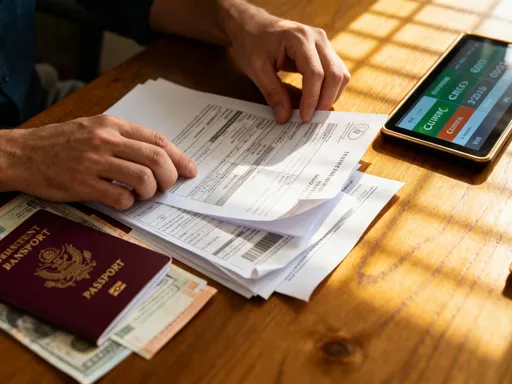
Moving to a new country? The financial side can feel like a maze. I’ve been there—juggling savings, transfers, and proof of funds while trying not to overpay or break rules. After months of research and costly mistakes, I finally cracked a solid strategy. This isn’t theory; it’s what actually worked. Let me walk you through the real financial moves behind a successful immigration prep—no fluff, just clarity. What started as a stressful scramble turned into a structured, repeatable process. The key wasn’t having more money—it was managing what I had with precision, foresight, and discipline. This is the roadmap I wish I’d had from day one.
Why Financial Readiness Makes or Breaks Immigration Plans
Immigration is not just about documents and interviews—it’s a financial journey as much as a legal one. Governments evaluating applicants don’t just want to know if you’re qualified to live and work in their country; they want assurance that you won’t become a financial burden. That’s why financial readiness is often the deciding factor between approval and rejection. While education, work experience, and language proficiency matter, none of them outweigh the fundamental requirement: proof of sufficient funds. This is not a minor checkbox. It is a central pillar of most immigration programs, especially for skilled workers, entrepreneurs, and family-sponsored applicants.
Consider the case of a mid-career engineer from Southeast Asia who met all the technical criteria for a skilled migration pathway. His qualifications were verified, his job offer was legitimate, and his language scores exceeded the minimum. Yet, his application was delayed by over six months due to unresolved questions about his financial documentation. The issue wasn’t a lack of money—it was the inability to prove the legitimacy and availability of his funds. Immigration officers questioned the source of a large deposit made just weeks before submission. Without a clear paper trail linking it to a property sale, the deposit appeared suspicious. The delay cost him his job offer and required a complete reapplication. This story is not unique. Across immigration systems in Canada, Australia, New Zealand, and parts of Europe, financial credibility is scrutinized as rigorously as any other component.
So, what do immigration authorities look for? They assess three main elements: liquidity, sustainability, and traceability. Liquidity refers to funds that are readily accessible—cash in bank accounts, not tied up in real estate or long-term investments. Sustainability means the money isn’t a one-time windfall but part of a stable financial picture, ideally supported by ongoing income or assets. Traceability ensures that every dollar can be accounted for, with documentation showing its origin and movement over time. A sudden influx of cash without explanation raises red flags, regardless of the total amount. This is why many applicants fail—not because they lack resources, but because they haven’t structured their finances in a way that aligns with official expectations.
The takeaway is clear: financial preparation must begin early, ideally 12 to 18 months before application. It’s not enough to accumulate savings; you must also build a narrative around them. That narrative includes consistent bank statements, documented income sources, and a logical explanation for any significant changes in your financial status. Waiting until the last minute to organize your finances is a recipe for stress and avoidable setbacks. By treating your financial profile as a core part of your immigration strategy—not an afterthought—you significantly increase your chances of a smooth and successful outcome.
Building a Rock-Solid Proof of Funds Strategy
Proof of funds is more than just showing a bank balance—it’s about demonstrating financial reliability in a way that satisfies official standards. Immigration authorities need to see that you have enough money to support yourself and your family during the initial settlement phase, typically six to twelve months. But they also need to trust that the money is yours, legally obtained, and not borrowed temporarily just to pass scrutiny. This is where many applicants stumble. They assume that a high account balance is sufficient, without realizing that the source and history of those funds matter just as much as the amount.
There are several acceptable forms of proof, each with its own strengths and limitations. The most straightforward is a personal bank statement showing liquid funds in a savings or checking account. These are preferred because they are easy to verify and clearly show availability. Fixed deposits or term deposits can also be used, but they must come with a letter from the bank confirming early withdrawal is possible. Property valuations are sometimes accepted, but only as supplementary evidence—they don’t count as liquid assets unless the property has been sold and the proceeds are in a verifiable account. Sponsorship letters from family members or employers can help, but they require not only the sponsor’s financial documentation but also a formal commitment that can be legally enforced.
One applicant successfully navigated this challenge by combining personal savings with a documented family loan. She had saved consistently for three years, but still fell short of the required threshold. Instead of making a last-minute deposit that would look suspicious, she arranged a formal loan from her parents. The transaction was processed through official banking channels, accompanied by a signed loan agreement outlining repayment terms. Both her account and her parents’ accounts reflected the transfer, and the agreement was notarized. This approach satisfied immigration officials because the funds were traceable, the source was legitimate, and the arrangement was transparent. It wasn’t a gift, which could raise questions about motive, nor was it an unsecured loan with no documentation. It was a carefully structured financial solution that respected the rules.
Timing is another critical factor. Authorities often require bank statements from the past six months, and they look for consistency. A sudden jump in balance—especially one that matches the minimum requirement exactly—can trigger an investigation. To avoid this, start building your financial record early. Make regular deposits that align with your declared income. If you’re selling an asset, do it well in advance and let the funds settle in your account. Avoid cash deposits unless they are properly documented. Every transaction should have a clear explanation that can be supported with paperwork. The goal is not just to meet the number, but to present a financial history that tells a believable, honest story.
Smart Money Transfer Tactics Without Losing Value
Once you’ve secured your funds, the next challenge is moving them across borders efficiently. International money transfers are often where significant value is lost—not to fraud, but to hidden fees, poor exchange rates, and inefficient methods. Many applicants default to their local bank, assuming it’s the safest option. While traditional banks offer security, they often charge high fees and apply unfavorable exchange margins, sometimes as high as 3% to 5% above the mid-market rate. Over large sums, this can amount to thousands of dollars in unnecessary costs.
A real-life example illustrates the impact of this oversight. One applicant needed to transfer USD 50,000 to a Canadian bank account for proof of funds. Using his domestic bank’s wire transfer service, he received only CAD 65,200 after fees and exchange losses. When he later compared rates, he discovered that a regulated digital transfer platform would have delivered CAD 68,800 for the same amount—saving him over CAD 3,600. The difference wasn’t due to risk or complexity; it was simply a matter of choosing a more transparent, competitive service. Digital platforms like Wise (formerly TransferWise), Revolut, or OFX operate with lower overhead and pass the savings to customers through fairer exchange rates and lower fees. They also provide full cost breakdowns upfront, so there are no surprises.
Beyond cost, timing matters. Currency exchange rates fluctuate daily, and transferring a large sum at the wrong moment can reduce its value significantly. A smart strategy is to stagger transfers over time, especially if you have flexibility in when funds are needed. This approach, known as dollar-cost averaging, smooths out volatility and reduces the risk of transferring everything at a low point. For example, instead of sending USD 60,000 in one transaction, an applicant might send USD 15,000 every two weeks over six weeks. This not only mitigates exchange rate risk but also creates a more natural transaction history, which can support financial credibility.
Another powerful tool is the multi-currency account. These accounts, offered by several fintech providers, allow you to hold and manage money in multiple currencies without immediate conversion. You can receive funds in one currency, store them, and transfer them later when rates are favorable. This gives you greater control and flexibility, especially if your income is in one currency but your destination country uses another. For applicants relocating from countries with volatile currencies, this can be a crucial advantage. The key is to use only regulated, reputable platforms. While the fintech space offers many options, not all are equally secure. Always verify licensing, read user reviews, and avoid services that promise unusually high exchange rates or guaranteed returns.
Avoiding Common Financial Traps During Preparation
Even with sufficient funds, many applications face delays or rejections due to avoidable financial missteps. These aren’t usually the result of dishonesty, but of oversight—small errors that create doubt about the legitimacy of the financial picture. One of the most common traps is unexplained fund sources. Immigration officers are trained to spot inconsistencies, and a deposit with no clear origin will almost always be questioned. This includes gifts, loans, or proceeds from asset sales that aren’t properly documented. Even if the money is legitimate, the lack of a paper trail can lead to requests for additional evidence, prolonging the process.
Another frequent issue is inconsistent income records. Applicants may show high savings but have tax returns or employment records that don’t match. For example, someone with USD 100,000 in savings but only USD 30,000 in declared annual income over the past three years will likely face scrutiny. Authorities may ask for explanations about how the savings were accumulated. Without supporting documents—such as investment returns, inheritance papers, or business profits—the discrepancy can cast doubt on the entire application. The solution is not to hide the gap, but to explain it clearly with verifiable evidence.
Reliance on short-term loans is another red flag. Some applicants take out personal loans shortly before applying, deposit the funds, and claim them as savings. This is risky. Immigration systems are designed to detect such patterns. A loan that appears in the account just weeks before submission, with no repayment history, will likely be viewed as artificial. Officers understand that real savings are built over time, not created overnight. If a loan is necessary, it should be structured transparently, with a clear agreement, a reasonable repayment schedule, and a logical reason for the borrowing.
To avoid these pitfalls, conduct a thorough financial audit well in advance. Review your bank statements, tax filings, and asset records. Ensure that every significant transaction has a documented explanation. Cross-check digital records with paper statements. If you’ve received money from family, have a signed letter explaining the nature of the transfer. If you’ve sold property, keep the deed, sale agreement, and bank deposit slip. The goal is to create a seamless, credible financial narrative that leaves no room for doubt. Remember, immigration authorities aren’t looking to disqualify honest applicants—they’re looking to verify legitimacy. By anticipating their concerns and addressing them proactively, you build trust and strengthen your case.
Balancing Liquidity and Long-Term Stability
One of the most overlooked aspects of immigration finance is the balance between immediate liquidity and long-term financial health. Immigration rules typically require a certain amount of liquid funds—money that is immediately accessible in a bank account. This is non-negotiable. However, keeping all your wealth in cash isn’t wise. Inflation erodes purchasing power, and idle money misses growth opportunities. The challenge is to meet the liquidity requirement without sacrificing your future financial security.
A smart approach is to divide your assets into two categories: settlement funds and growth funds. Settlement funds are the liquid portion set aside to meet immigration requirements and cover initial living expenses. These should be held in stable, low-risk accounts such as high-yield savings or short-term deposits. Growth funds, on the other hand, can be invested in diversified, low-volatility instruments like government bonds, index funds, or real estate—assets that preserve value and generate modest returns over time.
Consider the case of a professional who sold a home to fund his relocation. He needed USD 75,000 in liquid funds for his application. Instead of depositing the entire sale proceeds into a checking account, he allocated USD 75,000 to a dedicated savings account and invested the remainder conservatively in a diversified portfolio. The liquid portion satisfied immigration requirements, while the invested portion continued to grow, providing a financial cushion for future needs. This dual strategy allowed him to comply with regulations without freezing his entire net worth.
The key is timing. If you’re planning to sell an asset, do it early enough to allow the funds to settle and be documented. Avoid last-minute transactions that could appear rushed or suspicious. Also, be cautious about locking money in long-term investments right before applying. Even if the investment is low-risk, authorities may not accept it as proof of funds if it’s not easily accessible. Always confirm the specific liquidity rules of your destination country. Some programs allow a portion of funds to come from investments, but only if a withdrawal letter is provided. By planning ahead and structuring your assets strategically, you can meet both short-term requirements and long-term goals.
Tax and Reporting Implications You Can’t Ignore
Immigration doesn’t just change your address—it changes your financial obligations. Leaving one country and establishing residency in another triggers tax and reporting responsibilities in both jurisdictions. Ignoring these can lead to penalties, audits, or even immigration complications. The most common issue is failing to report foreign assets. Many countries, including the United States, Canada, and several European nations, require residents to disclose overseas financial accounts if they exceed a certain threshold. For example, U.S. taxpayers must file an FBAR (Foreign Bank Account Report) if the aggregate value of foreign accounts exceeds USD 10,000 at any time during the year.
Exit taxes are another consideration. Some countries impose a final tax on capital gains when you cease tax residency. Portugal, for instance, taxes unrealized gains on certain assets when you move abroad. France and Germany have similar rules for high-net-worth individuals. These taxes must be accounted for in your relocation budget. Failing to pay them can result in legal consequences and affect your ability to transfer funds legally.
On the destination side, tax residency rules determine when you become liable for local taxes. Most countries base residency on physical presence—spending more than 183 days in a year, for example. Once you’re a tax resident, you’re typically required to report worldwide income. This means income from foreign investments, rental properties, or pensions may be subject to taxation in your new country. Some countries have tax treaties to avoid double taxation, but you still need to file returns and claim relief through proper channels.
The best defense against these complexities is early planning and professional advice. Consult a cross-border tax advisor well before your move. They can help you structure your assets, time your departure, and comply with reporting requirements in both countries. Keep detailed records of all financial transactions, tax filings, and correspondence with authorities. Transparency is essential. One applicant learned this the hard way when he failed to report a small overseas savings account. After relocating, he was flagged during a routine audit, leading to back taxes, interest, and a tarnished financial record. The amount was minor, but the consequences were significant. By being proactive and compliant, you protect not just your finances, but your immigration status.
Putting It All Together: A Real-World Financial Blueprint
The journey to successful immigration finance is not about finding shortcuts—it’s about building a solid, transparent, and well-documented financial foundation. Let’s walk through the complete case of Maria, a 42-year-old healthcare professional who relocated from the Philippines to Canada under the Federal Skilled Worker Program. Her story illustrates how every element discussed in this guide can come together in a real-world scenario.
Maria began her preparation 18 months before applying. She first assessed the financial requirements: CAD 13,000 for a single applicant. She already had CAD 8,000 in savings but needed to bridge the gap. Instead of taking a loan, she increased her monthly contributions and used a portion of her investment portfolio, selling low-performing assets well in advance. Over ten months, she built up CAD 15,000 in a dedicated savings account, ensuring her balance remained stable for the final six months of documentation.
For proof of funds, she provided six months of bank statements, a letter from her employer confirming ongoing employment, and a notarized loan agreement for a small family contribution. She avoided cash deposits and ensured all transactions were traceable. When it came time to transfer funds, she used a regulated digital platform, saving over CAD 400 compared to her bank’s wire service. She staggered the transfer over three weeks, taking advantage of favorable exchange rates.
Before leaving, she consulted a tax advisor. She filed her final domestic tax return, declared all foreign assets, and confirmed her exit obligations. In Canada, she registered as a tax resident upon arrival and began reporting her worldwide income. She opened a multi-currency account to manage ongoing transfers from her home country and invested her long-term savings in low-risk Canadian bonds.
Maria’s application was approved in eight months—faster than average. There were no requests for additional financial evidence. Her success wasn’t due to wealth, but to discipline, planning, and attention to detail. She treated her finances as a core component of her immigration strategy, not an afterthought. Her story proves that with the right approach, anyone can navigate the complexities of immigration finance. The principles are universal: start early, document everything, choose efficient transfer methods, avoid red flags, and seek expert advice when needed. Immigration is a life-changing step. By mastering the financial side, you don’t just meet requirements—you build a stronger foundation for your new beginning.